



For Season 3 of Superman & Lois, Boxel Studio contributed across multiple stages of the VFX pipeline, from early planning and asset creation to final compositing.
Our work included digital doubles, detailed destruction environments, character animation, FX simulations, destruction sequences, and compositing.
Explore some of the work our team created to help bring the world of Superman & Lois Season 3 to the screen.
We combined design, modeling, muscle simulation, lighting, rendering, and compositing to bring the creature to life.
Working closely with the show’s VFX producer and showrunners, we developed a distinctive character that supported their creative vision while fitting naturally within the visual language of the series.
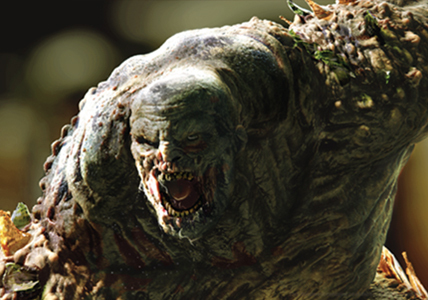
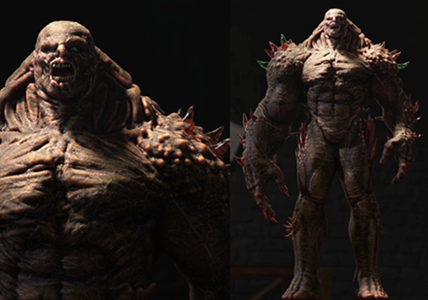
The process began with close collaboration with the show’s VFX producer and showrunners to understand the creative direction, narrative requirements, and goals for the creature.
Through ongoing discussions and visual exploration, we developed a unique design that complemented both the story and the established aesthetic of the show.


Once the concept was approved, our team translated the design into a highly detailed 3D model.
We refined the creature’s anatomy, forms, surface details, and textures through an iterative process, incorporating feedback throughout production to ensure the final asset matched the approved creative direction.

To create natural and believable movement, we developed a muscle simulation setup based on the creature’s anatomy and physical characteristics.
This allowed the character’s musculature and body deformation to respond organically during animation, helping integrate the creature convincingly into the live-action footage.
Lighting was developed to match the cinematography of each shot while reinforcing the creature’s presence within the scene.
By accounting for its materials, physical characteristics, environment, and the mood of each sequence, we integrated the digital character naturally with the live-action elements.


Our rendering process focused on achieving a high level of realism through detailed textures, shading, lighting, and physically based rendering techniques.
Iterative renders and review cycles allowed us to refine the creature until the final images matched the visual requirements of the production.


Boxel Studio has developed a custom virtual scouting toolkit in Unreal Engine designed to support planning and visualization during pre-production.
The tools allow production teams to integrate real-world scans, build immersive 3D environments, block cameras, explore lenses, and plan VFX sequences within a real-time environment.
Camera setups and movements can be explored before arriving on set, giving filmmakers greater flexibility to test compositions, lenses, framing, and movement while making creative and technical decisions earlier in the process.
The toolkit also supports VFX planning. Artists and filmmakers can position digital assets, explore effects, test interactions with environments, and visualize complex sequences before production begins.
This allows potential challenges to be identified earlier and gives both production and VFX teams a clearer understanding of how practical and digital elements will work together.
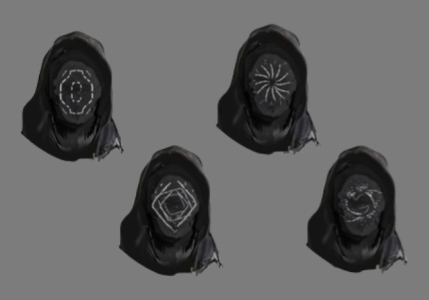
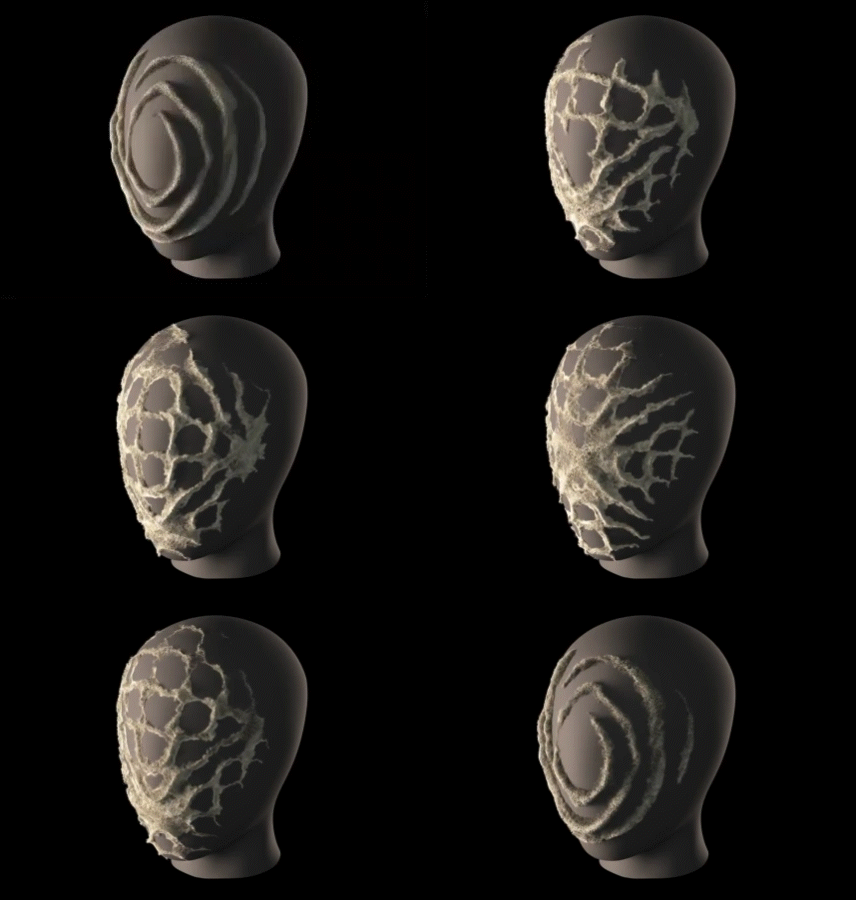
Bringing Onomatopoeia into a live-action environment presented a unique creative and technical challenge. Our goal was to preserve the identity of the character while developing a visual language for the mask that communicated its power on screen.
Using Houdini, our team developed a particle-based effect that reacts dynamically to each impact.
The mask ripples, shifts, and deforms with every strike, creating a distinctive visual response while reinforcing the force behind each attack.
The effect was developed through multiple rounds of experimentation and refinement, balancing the intensity of the simulation with the character’s established visual identity.
The final result gives the mask a dynamic presence that enhances Onomatopoeia’s abilities while remaining integrated with the live-action performance.
At Boxel Studio, research and development is an ongoing part of our production process.
We continuously evaluate new technologies and develop workflows that improve different stages of production, including previs, motion capture, animation, FX, and compositing.
Our R&D team explores emerging tools such as AI, real-time engines, and custom production technologies to determine where they can provide meaningful creative or technical advantages.
AI-assisted workflows can help automate repetitive tasks, accelerate specific production processes, and give artists more time to focus on creative decisions.
Real-time engines allow teams to visualize environments, assets, cameras, and effects interactively, making it possible to evaluate ideas and make decisions earlier in production.
Our focus is not simply on adopting new technology, but on finding practical ways to integrate it into established production workflows while maintaining the quality and creative control required for professional VFX and animation.